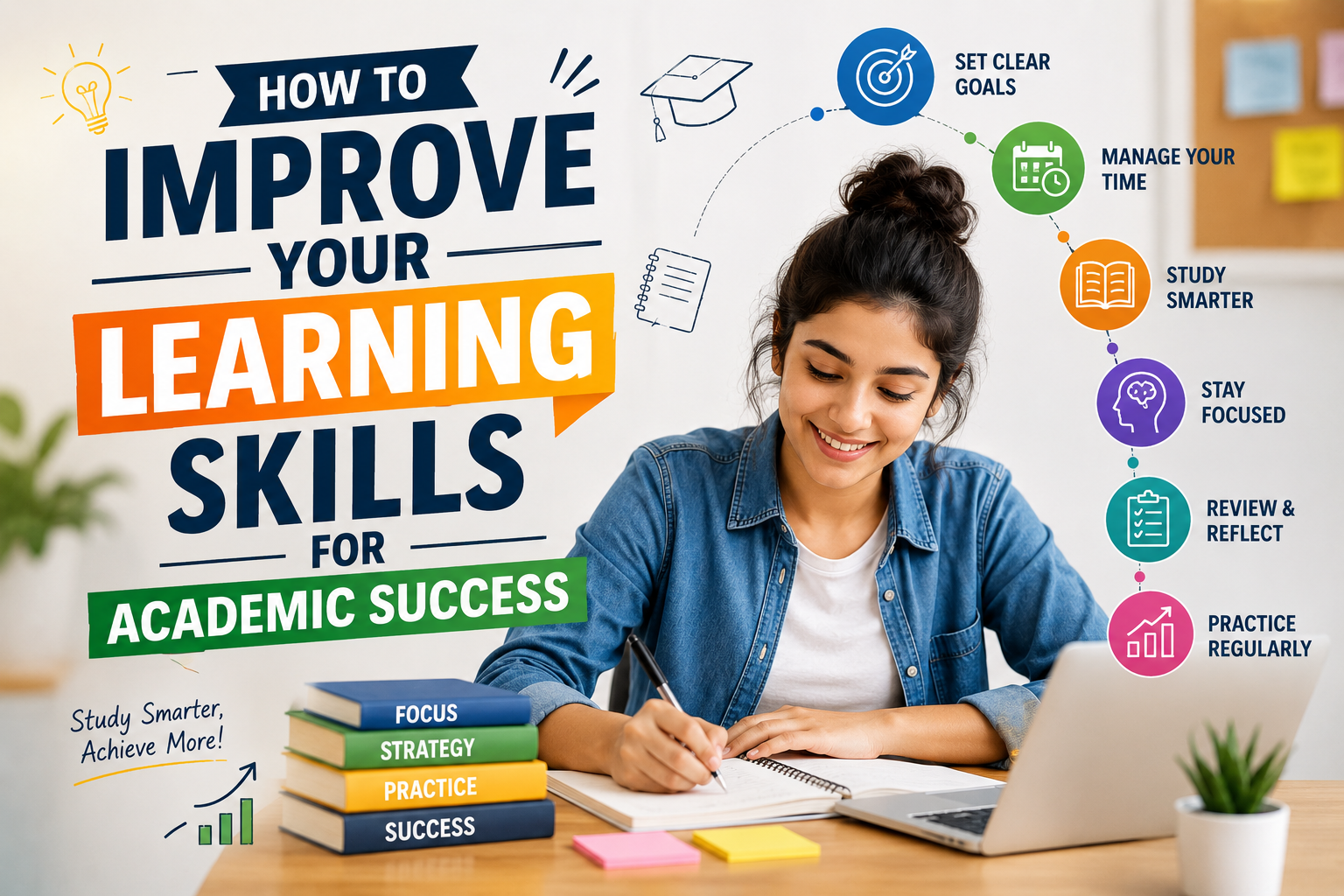
Learning is one of the most important parts of a student’s life. However, studying for long hours does not always lead to better results. What truly matters is how you learn. Students who develop strong learning skills can understand lessons faster, remember information longer, and perform better in exams.
In today’s fast-changing world, learning skills are more valuable than ever. Whether you are in school, college, or university, improving your study habits can help you achieve academic success and prepare for your future career.
This guide explains simple and effective ways to improve your learning skills using easy English. These practical tips can help students become more confident, productive, and successful in their studies.
Why Learning Skills Matter
Learning skills help students study more effectively instead of simply studying harder. Good learning habits improve concentration, memory, time management, and problem-solving abilities.
Some benefits of strong learning skills include:
- Better academic performance
- Improved memory
- Higher confidence
- Less exam stress
- Better time management
- Faster understanding of new topics
- Greater motivation to learn
Developing these skills can make studying easier and more enjoyable.
1. Set Clear Learning Goals
Every successful student studies with a purpose. Before starting, decide what you want to achieve.
For example:
- Finish one chapter today.
- Learn ten new vocabulary words.
- Complete all homework before dinner.
- Prepare for next week’s exam.
Clear goals help you stay focused and motivated.
2. Create a Study Schedule
A study plan helps you manage your time effectively.
Choose specific hours each day for studying and follow the schedule consistently.
A good study timetable should include:
- Study sessions
- Homework time
- Short breaks
- Revision time
- Rest and relaxation
Following a routine helps build discipline and improves productivity.
3. Find a Quiet Study Environment
Your study environment has a big impact on your ability to learn.
Choose a place that is:
- Quiet
- Clean
- Comfortable
- Well-lit
- Free from distractions
Turn off unnecessary notifications on your phone while studying to improve concentration.
4. Practice Active Learning
Reading your notes repeatedly is not always enough.
Instead, actively engage with the material by:
- Taking notes
- Asking questions
- Explaining concepts in your own words
- Solving practice problems
- Teaching someone else
Active learning helps you understand and remember information better.
5. Improve Your Reading Skills
Reading is an essential part of learning.
To improve reading efficiency:
- Read slowly when learning difficult topics.
- Highlight important points.
- Take short notes.
- Review key ideas after reading.
Understanding is more important than reading quickly.
6. Take Effective Notes
Good notes make revision much easier.
Keep your notes:
- Organized
- Clear
- Short
- Easy to understand
Use headings, bullet points, and keywords instead of writing every sentence from the textbook.
7. Manage Your Time Wisely
Time management is one of the most important learning skills.
Helpful habits include:
- Prioritizing important tasks
- Avoiding procrastination
- Breaking large tasks into smaller steps
- Completing assignments early
Managing time well reduces stress before exams.
8. Practice Regular Revision
Many students only study before exams.
Instead, review your lessons regularly.
You can:
- Revise weekly.
- Review class notes daily.
- Solve previous exam questions.
- Test yourself with quizzes.
Regular revision strengthens long-term memory.
9. Ask Questions
Never be afraid to ask questions if you do not understand something.
Ask:
- Teachers
- Classmates
- Tutors
- Study groups
Clarifying doubts early prevents confusion later.
10. Develop Critical Thinking
Good learners do more than memorize information.
They also:
- Analyze ideas
- Compare information
- Solve problems
- Think independently
- Evaluate different viewpoints
Critical thinking improves both academic and real-life decision-making.
11. Stay Healthy
Your brain performs better when your body is healthy.
Maintain healthy habits such as:
- Eating balanced meals
- Drinking enough water
- Sleeping 7–9 hours
- Exercising regularly
A healthy lifestyle improves concentration and memory.
12. Reduce Distractions
Modern technology can easily interrupt your studies.
To stay focused:
- Put your phone away.
- Turn off social media notifications.
- Study in a quiet place.
- Use study timers.
Less distraction means more productive learning.
13. Learn from Your Mistakes
Mistakes are part of the learning process.
Instead of feeling discouraged:
- Review incorrect answers.
- Understand why mistakes happened.
- Practice similar questions.
- Keep improving.
Every mistake teaches an important lesson.
14. Study with Others
Group study can improve understanding when done correctly.
Benefits include:
- Sharing ideas
- Solving difficult problems
- Learning different study methods
- Staying motivated
Choose serious study partners who are focused on learning.
15. Stay Positive and Motivated
Learning becomes easier when you believe in yourself.
Stay motivated by:
- Celebrating small achievements.
- Setting realistic goals.
- Tracking your progress.
- Rewarding yourself after completing tasks.
A positive attitude increases confidence and improves learning.
Use Technology Wisely
Technology offers many learning opportunities.
Helpful tools include:
- Educational websites
- Online courses
- Learning apps
- AI study assistants
- Digital flashcards
- Online libraries
Use technology to support your education instead of becoming distracted by it.
Common Learning Mistakes to Avoid
Many students make mistakes that reduce their academic performance.
Avoid these habits:
- Cramming before exams
- Studying without a plan
- Skipping revision
- Ignoring sleep
- Multitasking while studying
- Not asking questions
- Poor time management
- Depending only on memorization
Avoiding these mistakes can greatly improve your results.
Daily Habits for Better Learning
Successful students often follow simple daily habits.
These include:
- Reading every day
- Reviewing class notes
- Practicing difficult topics
- Completing homework on time
- Asking questions
- Managing time wisely
- Staying organized
- Maintaining a positive mindset
Small daily improvements lead to long-term academic success.
Final Thoughts
Improving your learning skills is one of the best investments you can make in your education and future career. Success is not determined by natural intelligence alone but by consistent effort, effective study habits, and a willingness to learn.
By setting clear goals, managing your time, practicing active learning, staying organized, and maintaining a healthy lifestyle, you can improve your academic performance and become a more confident learner.
Remember that learning is a lifelong journey. Every day offers a new opportunity to improve your knowledge and skills. Start applying these simple learning techniques today, stay consistent, and you will see steady progress toward academic success.
Top 10 High-Paying Jobs That Are in Demand in 2026
LinkedIn Jobs