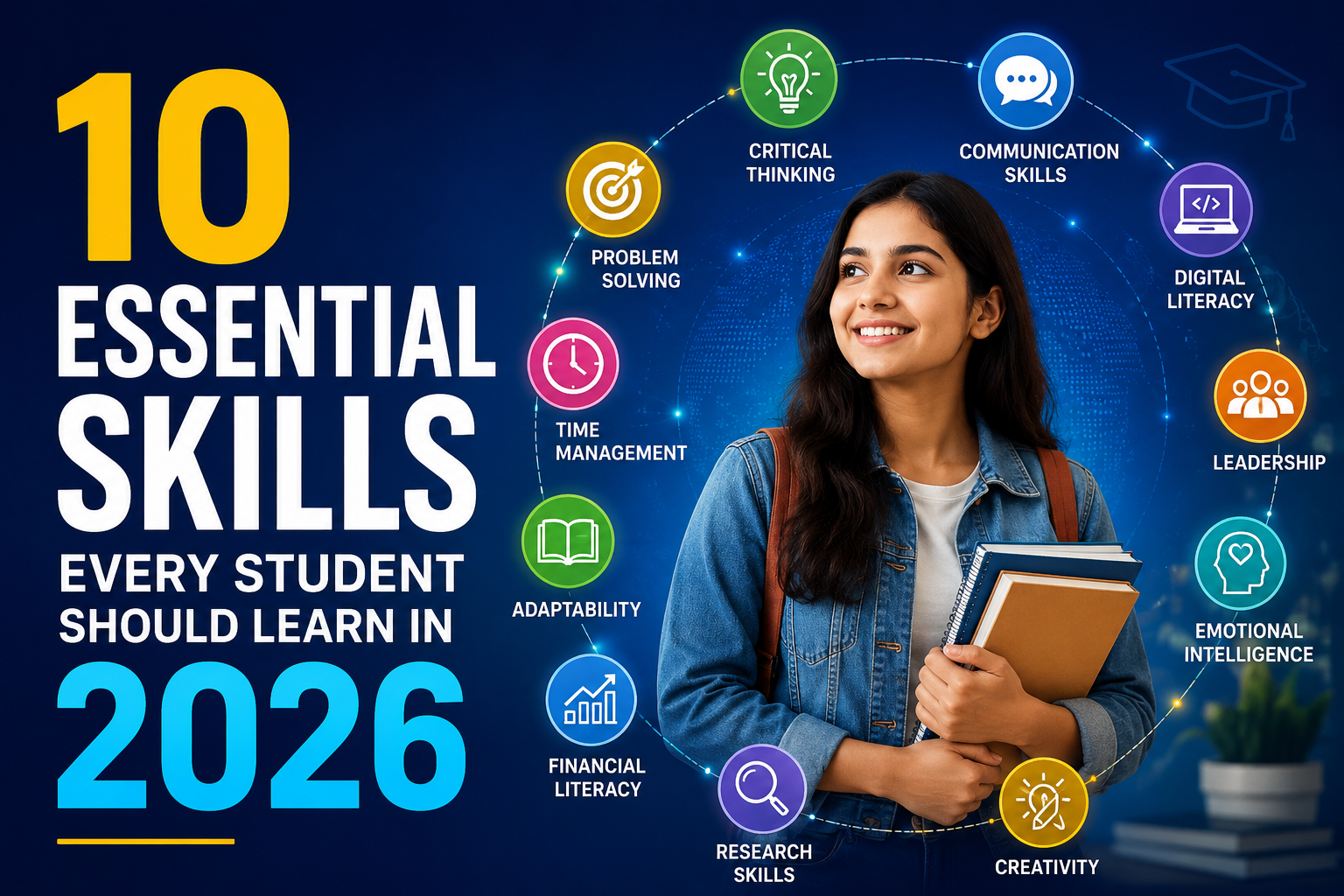
Education is no longer just about getting good grades. In today’s fast-changing world, students need practical skills that prepare them for college, careers, and everyday life. Essential Skills for Students. Technology is changing the way we study, work, and communicate, making it more important than ever to develop the right abilities.
In 2026, employers and universities are looking for students who can solve problems, communicate effectively, adapt to change, and use technology confidently. Learning these skills early can give students a strong advantage in the future.
In this guide, we will explore the 10 essential skills every student should learn in 2026 and how these skills can help build a successful future.
Why Are Essential Skills Important?
Academic knowledge is valuable, but practical skills help students apply what they learn in real life. These skills improve confidence, increase career opportunities, and prepare students for future challenges.
Benefits of learning essential skills include:
- Better academic performance
- Improved communication
- Higher confidence
- Better job opportunities
- Strong leadership abilities
- Greater financial awareness
- Increased problem-solving skills
Developing these abilities now will help students succeed in both education and professional life.
1. Communication Skills
Good communication is one of the most valuable skills for every student.
Students should learn how to:
- Speak confidently
- Write clearly
- Listen carefully
- Share ideas effectively
- Work with others
Strong communication skills improve classroom participation, presentations, interviews, and future careers.
2. Digital Literacy
Technology is now a part of almost every profession.
Students should know how to use:
- Office software
- Email professionally
- Cloud storage
- Video conferencing tools
- AI-powered learning tools
- Online research platforms
Digital literacy makes learning easier and prepares students for modern workplaces.
3. Critical Thinking
Critical thinking helps students analyze information before making decisions.
Instead of accepting information immediately, students should learn to:
- Ask questions
- Evaluate facts
- Solve problems logically
- Think independently
- Compare different viewpoints
This skill improves academic performance and decision-making.
4. Time Management
Managing time effectively helps students balance studies, hobbies, and personal life.
Simple time management habits include:
- Creating daily schedules
- Setting priorities
- Avoiding procrastination
- Completing assignments on time
- Taking regular study breaks
Good time management reduces stress and improves productivity.
5. Financial Literacy
Every student should understand basic money management.
Important financial skills include:
- Budgeting
- Saving money
- Understanding bank accounts
- Avoiding unnecessary debt
- Basic investing
Financial literacy helps students make smarter money decisions throughout life.
6. Problem-Solving Skills
Life often presents unexpected challenges.
Students should develop the ability to:
- Identify problems
- Find practical solutions
- Stay calm under pressure
- Think creatively
- Make informed decisions
Problem-solving is one of the most valuable workplace skills.
7. Teamwork and Collaboration
Most careers require working with others.
Students should learn how to:
- Respect different opinions
- Share responsibilities
- Support teammates
- Resolve conflicts peacefully
- Work toward common goals
Strong teamwork skills improve both academic and professional success.
8. Adaptability
The world is changing rapidly.
New technologies and industries continue to emerge.
Students who adapt quickly are more likely to succeed.
Adaptability includes:
- Learning new skills
- Accepting change
- Staying positive
- Being flexible
- Trying new opportunities
This mindset helps students handle future challenges with confidence.
9. Leadership Skills
Leadership is not only about managing others.
It also means:
- Taking responsibility
- Making good decisions
- Motivating others
- Solving problems
- Setting a positive example
Students can develop leadership through school activities, volunteer work, and group projects.
10. Emotional Intelligence
Emotional intelligence is the ability to understand and manage emotions.
Students with strong emotional intelligence can:
- Handle stress better
- Build healthy relationships
- Understand others’ feelings
- Communicate respectfully
- Resolve conflicts calmly
This skill improves both personal and professional life.
How Students Can Develop These Skills
Learning essential skills does not require expensive courses.
Students can improve by:
- Reading books
- Watching educational videos
- Taking online courses
- Joining school clubs
- Participating in debates
- Volunteering
- Completing group projects
- Practicing regularly
Daily practice leads to continuous improvement.
The Role of Technology in Student Success
Technology offers countless learning opportunities.
Students can use:
- Educational websites
- Learning apps
- AI study assistants
- Online certifications
- Digital libraries
- Language learning platforms
Technology should be used as a learning tool rather than just for entertainment.
Common Mistakes Students Should Avoid
Many students limit their future opportunities by making avoidable mistakes.
Avoid:
- Ignoring communication skills
- Poor time management
- Depending only on grades
- Avoiding teamwork
- Not learning technology
- Fear of making mistakes
- Poor financial habits
- Lack of confidence
Learning from these mistakes creates better long-term success.
Tips for Continuous Self-Improvement
Students should always look for ways to improve.
Helpful habits include:
- Reading every day
- Setting personal goals
- Learning one new skill each month
- Asking questions
- Practicing public speaking
- Building positive friendships
- Managing money wisely
- Staying physically and mentally healthy
Small improvements every day create lasting success.
Why These Skills Matter in 2026
Employers today look beyond academic degrees.
They value candidates who can:
- Solve problems
- Communicate effectively
- Work in teams
- Learn quickly
- Use technology
- Manage time
- Adapt to change
Students who develop these skills now will have more opportunities in college, business, and future careers.
Final Thoughts
Success in 2026 depends on much more than academic knowledge. Essential Skills for Students. Students who develop practical life skills will be better prepared for higher education, future careers, and personal growth. Skills like communication, digital literacy, critical thinking, financial management, teamwork, and adaptability are becoming increasingly valuable in today’s world.
The best time to start learning these skills is now. Begin with one skill, practice it consistently, and gradually build others over time. Essential Skills for Students. Every new skill you learn brings you one step closer to a brighter and more successful future.
Remember, education is not just about passing exams—it is about preparing yourself for life. Investing in these essential skills today will help you succeed tomorrow.
Top 10 High-Paying Jobs That Are in Demand in 2026
LinkedIn Jobs