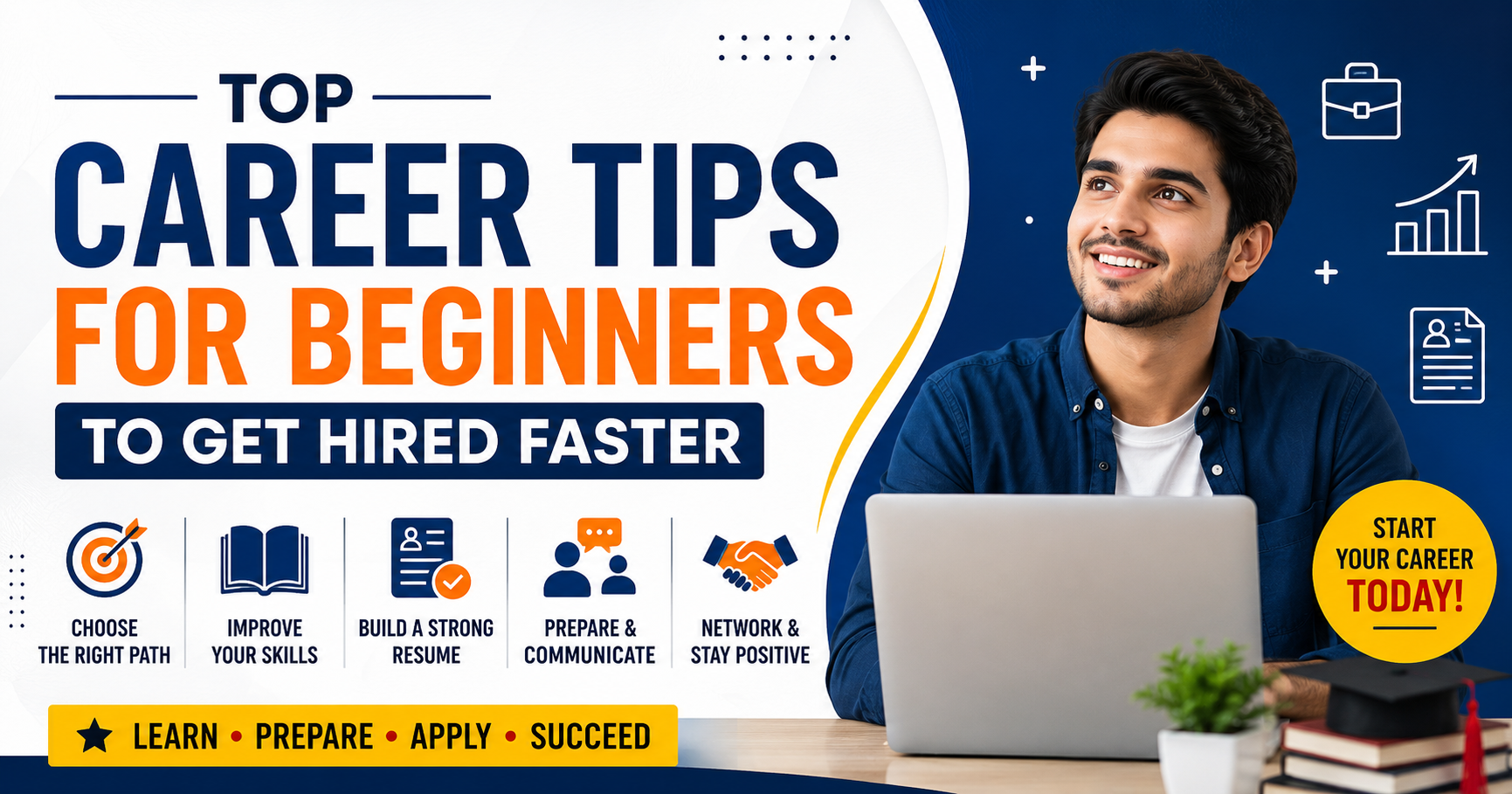
Starting your first job can feel exciting and challenging at the same time. Many beginners worry because they have little or no work experience. The good news is that every successful professional started as a beginner. With the right approach, you can improve your chances of getting hired faster.
In this guide, you will learn the top career tips for beginners that employers value. These simple strategies will help you build confidence, improve your skills, and find the right job in 2026.
1. Choose the Right Career Path
The first step is to decide what kind of career you want. Don’t apply for every job you see. Instead, focus on jobs that match your interests, skills, and long-term goals.
Ask yourself these questions:
- What subjects do I enjoy?
- What skills do I already have?
- What type of work makes me happy?
- Which industries have good future opportunities?
Choosing the right career path helps you stay motivated and grow faster.
2. Learn In-Demand Skills
Today, companies look for people with practical skills. Even if you don’t have experience, having the right skills can make you stand out.
Some of the most valuable skills in 2026 include:
- Communication skills
- Computer skills
- Microsoft Office
- Digital marketing
- Graphic design
- Programming
- Data analysis
- Problem-solving
- Teamwork
- Time management
You can learn many of these skills through free online courses and practice them every day.
3. Create a Professional Resume
Your resume is often the first thing an employer sees. A clear and professional resume can increase your chances of getting an interview.
A good beginner resume should include:
- Full name and contact information
- Professional summary
- Education
- Skills
- Certifications
- Projects
- Volunteer work
- Languages
Keep your resume short, simple, and free from spelling mistakes.
4. Write a Strong Cover Letter
Many beginners ignore cover letters, but they can help you stand out.
Your cover letter should explain:
- Why you want the job
- Why you are interested in the company
- What skills you can offer
- Why you are a good fit
Write in simple English and keep it under one page.
5. Build Your Online Presence
Many employers search candidates online before hiring them.
Create a professional online profile by:
- Using a professional photo
- Adding your education
- Listing your skills
- Showing your certifications
- Sharing your projects
A strong online profile helps recruiters trust your abilities.
6. Gain Practical Experience
Experience is important, but everyone starts somewhere.
You can build experience through:
- Internships
- Freelancing
- Volunteer work
- Personal projects
- College assignments
- Part-time jobs
Even small projects can show employers that you are willing to learn.
7. Improve Your Communication Skills
Good communication is one of the most important career skills.
Practice speaking clearly and confidently.
Improve your communication by:
- Reading books
- Watching educational videos
- Speaking English every day
- Listening carefully
- Practicing interviews
Employers prefer candidates who communicate well with customers and team members.
8. Prepare for Job Interviews
Interview preparation can make a huge difference.
Before your interview:
- Research the company
- Read the job description
- Practice common interview questions
- Prepare examples of your skills
- Dress professionally
- Arrive on time
Confidence comes from preparation.
9. Apply for Jobs Every Day
Finding your first job takes time.
Instead of waiting for one company to reply, apply to several suitable jobs every day.
Create a daily goal, such as:
- Apply for 5–10 jobs
- Update your resume
- Learn one new skill
- Contact one recruiter
Consistency increases your chances of getting hired.
10. Build a Professional Network
Networking helps many people find jobs faster.
Connect with:
- Teachers
- Friends
- Family members
- Former classmates
- Industry professionals
Tell people that you are looking for work. Sometimes the best job opportunities come through recommendations.
11. Keep Learning
Technology changes quickly, and employers appreciate people who continue learning.
Read career blogs, watch tutorials, attend webinars, and earn certificates in your chosen field.
Learning new skills keeps your resume competitive.
12. Stay Positive After Rejections
Most job seekers receive rejection emails.
Do not lose confidence.
Instead:
- Improve your resume.
- Learn new skills.
- Practice interviews.
- Apply again.
Every interview teaches you something valuable.
Common Mistakes Beginners Should Avoid
Avoid these common mistakes when applying for jobs:
- Sending the same resume to every company
- Applying without reading the job description
- Ignoring interview preparation
- Having grammar and spelling mistakes
- Giving incomplete information
- Missing application deadlines
- Using an unprofessional email address
- Arriving late for interviews
- Speaking negatively about previous experiences
- Giving up too quickly
Avoiding these mistakes can improve your chances of getting hired.
Best Career Fields for Beginners in 2026
Several industries are expected to offer excellent opportunities for beginners:
- Information Technology (IT)
- Artificial Intelligence
- Cybersecurity
- Healthcare
- Digital Marketing
- Finance
- E-commerce
- Customer Service
- Education
- Renewable Energy
These fields offer strong career growth and competitive salaries.
Daily Habits for Career Success
Small daily habits can help you achieve long-term success.
Try to:
- Read for 20 minutes.
- Practice English.
- Learn one new skill.
- Update your resume regularly.
- Apply for new jobs.
- Build professional connections.
- Stay organized.
- Set weekly career goals.
These habits improve your confidence and career prospects.
Final Thoughts
Starting your career may seem difficult, but every professional was once a beginner. By following these top career tips for beginners, you can improve your skills, create a strong resume, prepare for interviews, and apply with confidence.
Remember that success does not happen overnight. Stay patient, continue learning, and never stop improving yourself. Every application, interview, career tips for beginners, and new skill brings you one step closer to your dream job. With consistency and determination, you can get hired faster and build a successful career in 2026 and beyond.
Top 10 High-Paying Jobs That Are in Demand in 2026
LinkedIn Jobs