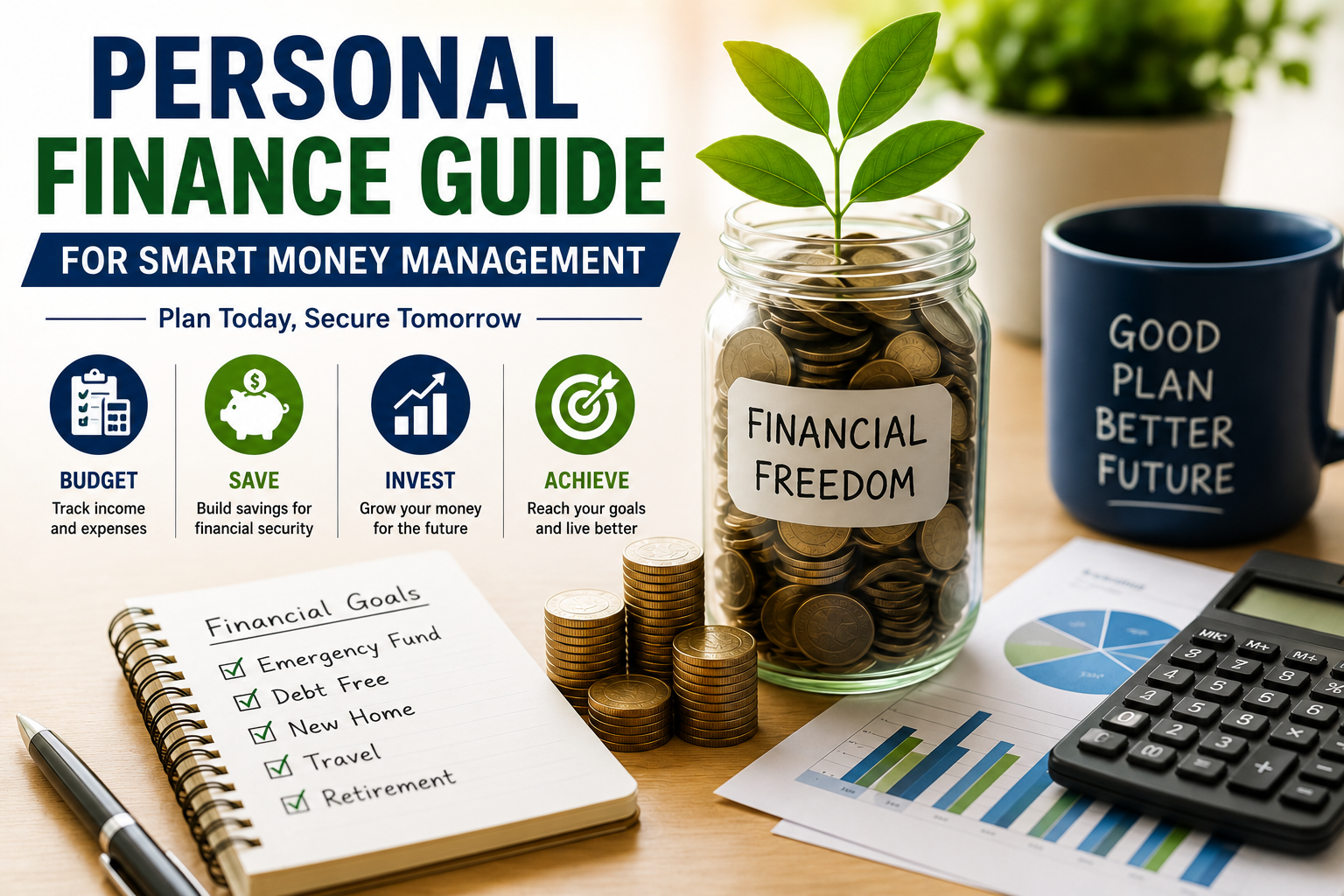
Managing your money is one of the most important life skills. Many people work hard every day but still struggle with money because they do not know how to manage it properly. personal finance guide. Personal finance is all about making smart decisions with your income so you can meet your daily needs, prepare for emergencies, and achieve your future goals.
This personal finance guide will explain budgeting, saving, and investing in simple words. Whether you are a student, employee, freelancer, or business owner, these tips will help you improve your financial health.
What Is Finance?
Personal finance means managing your money wisely. It includes earning, spending, saving, investing, and protecting your money. Good financial planning helps you avoid debt, reduce stress, and build long-term wealth.
The main areas of personal finance include:
- Budgeting
- Saving money
- Investing
- Managing debt
- Financial planning
- Retirement planning
- Emergency funds
Learning these basics can help you make better financial decisions throughout your life.
Why Is Budgeting Important?
A budget is a simple plan that shows how much money you earn and how much you spend. Budgeting helps you control your money instead of wondering where it disappeared.
Benefits of Budgeting
- Helps control spending
- Reduces financial stress
- Prevents unnecessary debt
- Increases savings
- Helps achieve financial goals
- Makes monthly expenses easier to manage
Without a budget, it becomes easy to overspend on things you do not really need.
How to Create a Simple Budget
Creating a budget is easier than most people think.
Step 1: Calculate Your Income
Write down all sources of income, including:
- Salary
- Freelance work
- Business income
- Rental income
- Side jobs
Know exactly how much money comes in each month.
Step 2: List Your Expenses
Divide your expenses into two categories.
Fixed Expenses
- Rent
- Mortgage
- Insurance
- School fees
- Loan payments
Variable Expenses
- Groceries
- Entertainment
- Shopping
- Dining out
- Fuel
- Utilities
Step 3: Compare Income and Expenses
Subtract your total expenses from your monthly income.
If you spend more than you earn, you need to reduce unnecessary expenses.
Step 4: Track Your Spending
Review your spending every week or month. This helps you identify areas where you can save money.
The 50/30/20 Budget Rule
One of the easiest budgeting methods is the 50/30/20 rule.
- 50% for needs (rent, food, bills)
- 30% for wants (shopping, travel, entertainment)
- 20% for savings and investments
This simple rule helps maintain a healthy balance between spending and saving.
Why Saving Money Matters
Saving means putting aside money for future use instead of spending it immediately.
Life is unpredictable. personal finance guide. Unexpected expenses such as medical emergencies, job loss, or car repairs can happen anytime. Savings provide financial security during difficult situations.
Benefits of Saving Money
- Emergency protection
- Less financial stress
- Better financial freedom
- Ability to buy expensive items without loans
- Helps achieve long-term goals
Even saving a small amount every month can make a big difference over time.
Build an Emergency Fund
An emergency fund is money reserved only for unexpected situations.
Financial experts recommend saving enough money to cover three to six months of living expenses.
Use your emergency fund only for:
- Medical emergencies
- Job loss
- Home repairs
- Car repairs
- Unexpected family expenses
Keep this money in an easily accessible savings account.
Smart Ways to Save More Money
Saving money does not always require earning more. Sometimes spending smarter is enough.
Here are some practical saving tips:
- Pay yourself first by saving before spending.
- Avoid impulse shopping.
- Cook meals at home more often.
- Cancel subscriptions you rarely use.
- Compare prices before buying.
- Use discounts and cashback offers.
- Buy only what you truly need.
- Set monthly saving goals.
Small savings every month can grow into a large amount over time.
What Is Investing?
Saving protects your money, while investing helps it grow.
Investing means putting your money into assets that may increase in value over time. Instead of letting your money sit in a savings account, investing allows it to earn higher returns.
Although investing involves some risk, it also offers greater long-term growth.
Popular Investment Options
There are many ways to invest your money.
1. Stocks
Buying stocks means owning a small part of a company.
Stocks can provide high returns over many years, but their prices can rise and fall.
2. Mutual Funds
Mutual funds combine money from many investors to purchase different investments.
They are a good option for beginners because professionals manage the investments.
3. Bonds
Bonds are generally considered lower-risk investments.
When you buy a bond, you are lending money to a government or company in exchange for regular interest payments.
4. Real Estate
Buying property can generate rental income and long-term appreciation.
However, real estate usually requires more money to get started.
5. Retirement Accounts
Many employers offer retirement savings plans with tax benefits.
Starting early gives your investments more time to grow.
Start Investing Early
One of the biggest advantages in investing is time.
The earlier you start investing, the more your money can grow through compound returns.
For example, someone who starts investing at age 25 often builds much more wealth than someone who starts at age 40, even if both invest the same amount each month.
Time is one of the most powerful tools in personal finance.
Understand Investment Risk
Every investment has some level of risk.
Higher returns usually come with higher risks.
Before investing:
- Learn about the investment.
- Never invest money you may need soon.
- Diversify your investments.
- Invest according to your financial goals.
- Avoid emotional decisions during market ups and downs.
Knowledge reduces unnecessary risk.
Avoid Common Money Mistakes
Many people make financial mistakes that slow their progress.
Common mistakes include:
- Spending more than earning
- Not having a budget
- Ignoring savings
- Using too much credit card debt
- Investing without research
- Delaying retirement planning
- Not building an emergency fund
Avoiding these mistakes can improve your financial future.
Set Clear Financial Goals
Having financial goals keeps you motivated.
Examples include:
Short-Term Goals
- Save for a vacation
- Buy a laptop
- Pay off a credit card
Medium-Term Goals
- Buy a car
- Start a business
- Save for higher education
Long-Term Goals
- Buy a home
- Build retirement savings
- Achieve financial independence
Write your goals down and review them regularly.
Personal Tips for Beginners
If you are just starting your financial journey, remember these simple tips:
- Spend less than you earn.
- Create a monthly budget.
- Save money every month.
- Build an emergency fund.
- Start investing early.
- Avoid unnecessary debt.
- Learn about money regularly.
- Review your finances every month.
- Set realistic financial goals.
- Stay patient and consistent.
Small habits today create a stronger financial future.
Conclusion
Personal finance does not have to be complicated. By learning the basics of budgeting, saving, and investing, you can take control of your money and build a secure future. personal finance guide. A simple budget helps you manage expenses, regular savings prepare you for emergencies, and smart investments allow your wealth to grow over time.
The key to financial success is consistency. You do not need to earn a huge income to become financially stable. Start with small steps, make wise financial decisions, and stay committed to your goals. Over time, these habits will help you achieve greater financial freedom and peace of mind.
Top 10 High-Paying Jobs That Are in Demand in 2026
LinkedIn Jobs