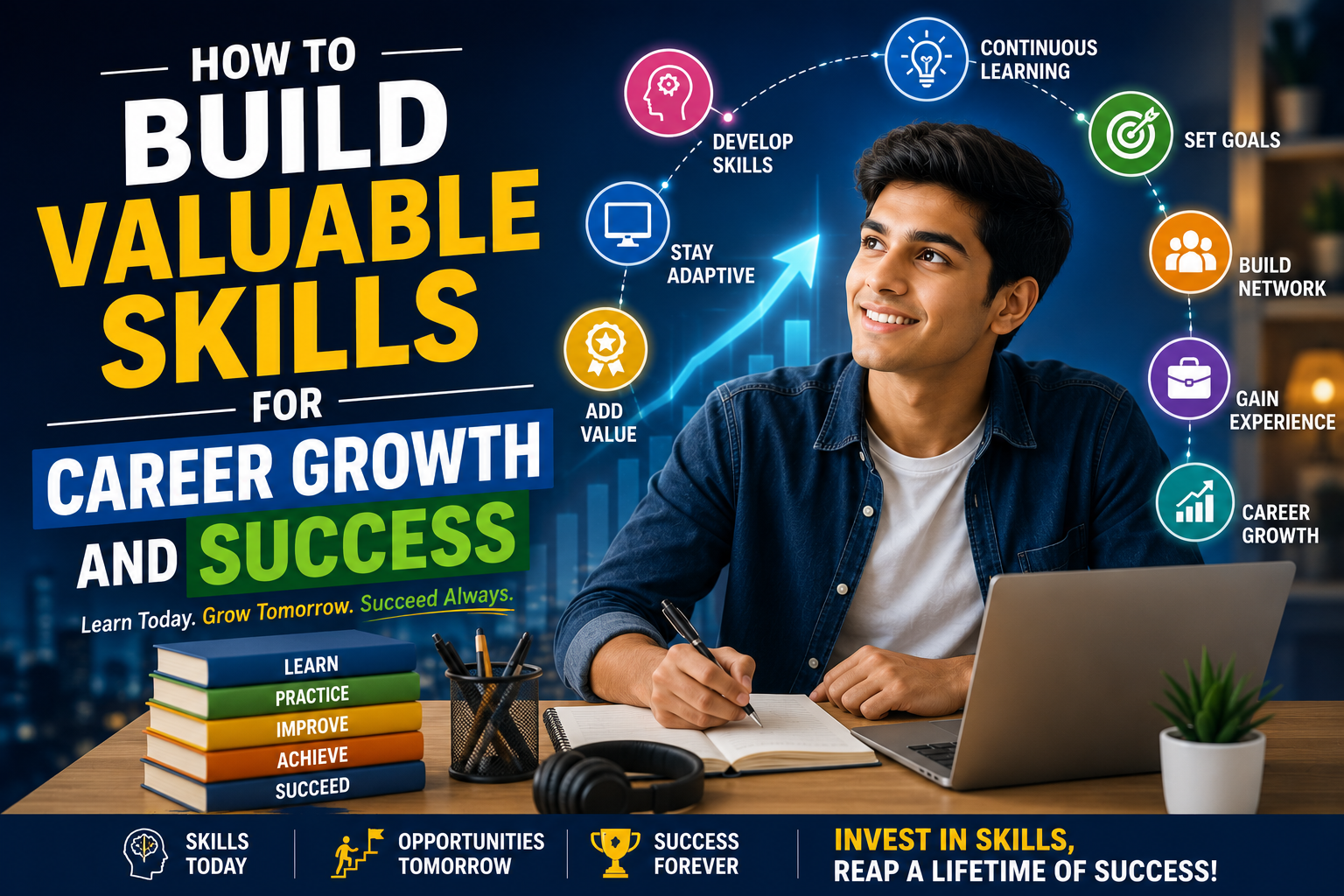
In today’s competitive job market, having a degree is important, but it is not always enough. Employers are looking for people who have practical skills, a positive attitude, and the ability to adapt to change. Career Growth Skills, Whether you are a student, a fresh graduate, or a working professional, building valuable skills can help you grow in your career and achieve long-term success.
The workplace is changing quickly because of technology, remote work, Career Growth Skills, and artificial intelligence. To stay competitive, you need to keep learning and improving your abilities. The good news is that anyone can develop valuable skills with consistent effort and the right approach.
In this guide, you will learn how to build valuable skills for career growth and success using simple, practical, and beginner-friendly strategies.
Why Skills Matter More Than Ever
Skills help you perform your job better, solve problems, and work effectively with others. While qualifications can help you get an interview, your skills often determine how successful you become in your career.
Some benefits of developing valuable skills include:
- Better job opportunities
- Higher earning potential
- Greater confidence
- Faster career growth
- Improved productivity
- Strong professional reputation
- More career flexibility
Learning new skills is one of the best investments you can make in yourself.
1. Identify Your Career Goals
Before learning new skills, decide where you want your career to go.
Ask yourself questions like:
- What job do I want?
- Which industry interests me?
- What skills are required for that career?
- What do I need to improve?
Having clear goals helps you focus on learning the right skills instead of wasting time on skills you may never use.
2. Learn Communication Skills
Communication is one of the most valuable workplace skills.
Good communication includes:
- Speaking clearly
- Listening carefully
- Writing professional emails
- Giving presentations
- Sharing ideas confidently
Strong communication helps you build better relationships with coworkers, managers, and clients.
3. Improve Your Digital Skills
Almost every career today requires basic digital knowledge.
Important digital skills include:
- Microsoft Office
- Google Workspace
- Email management
- Online collaboration tools
- Cloud storage
- AI productivity tools
- Basic cybersecurity
Learning digital skills makes you more productive and employable.
4. Develop Problem-Solving Skills
Every workplace faces challenges.
Employers value people who can:
- Identify problems
- Analyze situations
- Think logically
- Find practical solutions
- Make informed decisions
Practice solving real-life problems to improve this skill.
5. Strengthen Time Management
Managing your time effectively helps you complete work without unnecessary stress.
Simple time management habits include:
- Creating daily task lists
- Setting priorities
- Meeting deadlines
- Avoiding procrastination
- Breaking large tasks into smaller steps
Good time management improves productivity and reduces pressure.
6. Learn Teamwork and Collaboration
Most jobs require working with other people.
Good teamwork means:
- Respecting different opinions
- Sharing responsibilities
- Helping colleagues
- Solving conflicts professionally
- Working toward common goals
Strong collaboration skills make you a valuable employee.
7. Improve Critical Thinking
Critical thinking helps you make better decisions.
Instead of accepting information immediately, learn to:
- Ask questions
- Compare different ideas
- Evaluate evidence
- Think independently
- Make logical conclusions
Critical thinking is useful in every profession.
8. Build Leadership Skills
Leadership is not only for managers.
Anyone can become a leader by:
- Taking responsibility
- Motivating others
- Solving problems
- Staying positive
- Leading by example
Leadership skills often create opportunities for promotions.
9. Keep Learning New Skills
Industries continue to evolve every year.
Stay updated by learning about:
- Artificial intelligence
- Digital marketing
- Data analysis
- Project management
- Programming
- Graphic design
- Content creation
Continuous learning keeps your career moving forward.
10. Improve Your Emotional Intelligence
Emotional intelligence helps you understand your own emotions and those of others.
It allows you to:
- Handle stress calmly
- Build strong relationships
- Resolve conflicts
- Show empathy
- Stay positive during challenges
Employers highly value emotional intelligence because it improves teamwork and workplace culture.
11. Build a Professional Network
Networking creates new career opportunities.
Connect with:
- Teachers
- Mentors
- Coworkers
- Industry professionals
- Business communities
Strong professional relationships can lead to job offers, partnerships, and valuable advice.
12. Create a Personal Learning Plan
Learning becomes easier with a clear plan.
Your plan should include:
- Skills to learn
- Weekly study hours
- Learning resources
- Practice projects
- Progress tracking
A learning plan helps you stay focused and organized.
13. Practice Every Day
Skills improve through regular practice.
For example:
- Writers should write daily.
- Designers should create new projects.
- Programmers should build small applications.
- Speakers should practice presentations.
Small daily improvements create long-term success.
14. Accept Feedback
Constructive feedback helps you grow.
Listen carefully to advice from:
- Managers
- Teachers
- Mentors
- Clients
- Colleagues
Use feedback to improve instead of becoming discouraged.
15. Stay Adaptable
Technology and workplaces change quickly.
Adaptability means:
- Learning new tools
- Accepting change
- Being flexible
- Staying open to new ideas
- Solving unexpected problems
Adaptable professionals remain valuable in every industry.
16. Build Good Work Habits
Professional success often comes from daily habits.
Develop habits such as:
- Being punctual
- Meeting deadlines
- Staying organized
- Keeping promises
- Paying attention to details
Good habits build trust and reliability.
17. Learn Basic Financial Skills
Managing money wisely supports long-term career success.
Important financial habits include:
- Budgeting
- Saving regularly
- Building an emergency fund
- Investing for the future
- Avoiding unnecessary debt
Financial stability allows you to make better career decisions.
18. Maintain a Positive Mindset
Career growth takes time.
Stay positive by:
- Setting realistic goals
- Celebrating small achievements
- Learning from mistakes
- Staying motivated
- Focusing on continuous improvement
A positive attitude helps you overcome challenges.
Common Mistakes That Slow Career Growth
Many people delay their progress by making avoidable mistakes.
Avoid these common errors:
- Stopping learning after graduation
- Ignoring communication skills
- Poor time management
- Fear of change
- Avoiding feedback
- Waiting for opportunities instead of creating them
- Giving up too quickly
- Not building professional relationships
Recognizing these mistakes early can help you grow faster.
Daily Habits for Career Success
Highly successful professionals often:
- Read every day
- Learn new skills regularly
- Set daily goals
- Stay organized
- Exercise regularly
- Build professional relationships
- Review their progress
- Continue improving themselves
These habits create consistent long-term growth.
The Importance of Lifelong Learning
The most successful professionals never stop learning.
As technology and industries change, lifelong learning helps you:
- Stay competitive
- Improve your skills
- Discover new opportunities
- Increase your income
- Achieve career satisfaction
Learning should become a lifelong habit rather than a temporary activity.
Final Thoughts
Building valuable skills is one of the smartest investments you can make for your future. While education provides knowledge, practical skills help you apply that knowledge in the workplace and achieve long-term career success.
Start by identifying your goals and focus on improving communication, Career Growth Skills, digital skills, leadership, time management, and problem-solving. Practice consistently, accept feedback, and remain open to learning new things. Remember that career growth is a journey, not a race.
Every new skill you develop increases your confidence, improves your job opportunities, and brings you closer to your professional goals. Stay curious, work hard, and continue learning. Your commitment to personal and professional development today will shape your success tomorrow.
Top 10 High-Paying Jobs That Are in Demand in 2026
LinkedIn Jobs