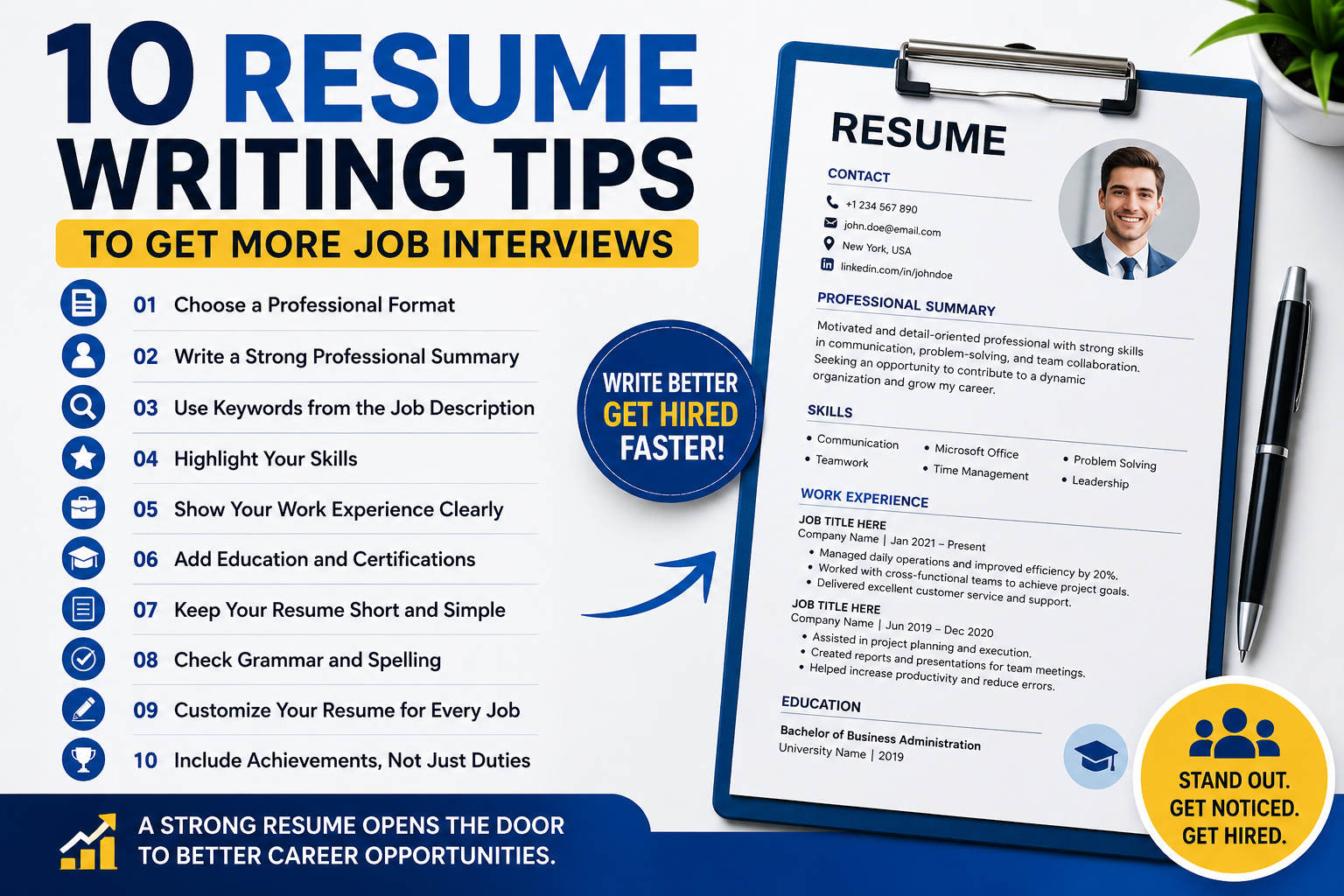
Finding a job starts with one important document—your resume. A well-written resume can help you get noticed by employers and increase your chances of receiving interview calls. Resume Writing Tips. On the other hand, a weak resume may stop you from getting the opportunity you deserve.
Many companies receive hundreds of job applications for one position. Recruiters usually spend only a few seconds reviewing each resume. That is why your resume should be clear, professional, and easy to read.
In this guide, you will learn 10 resume writing tips that can help you create a strong resume and get more job interviews in 2026.
1. Choose a Professional Resume Format
The first impression matters. A clean and organized resume makes it easier for employers to find the information they need.
Use a simple format with clear headings and enough spacing. Avoid using too many colors, fancy fonts, or unnecessary graphics.
Your resume should include:
- Contact Information
- Professional Summary
- Skills
- Work Experience
- Education
- Certifications
- Projects
- Languages
A professional layout makes your resume look trustworthy and easy to scan.
2. Write a Strong Professional Summary
The professional summary appears at the top of your resume. It is a short paragraph that tells employers who you are and what you can offer.
A good summary should include:
- Your profession or career goal
- Your key skills
- Your achievements
- The value you can bring to the company
Example
“Motivated and detail-oriented graduate with strong communication and computer skills. Passionate about learning new technologies and helping companies achieve their goals. Quick learner with excellent teamwork abilities.”
Keep your summary between 3 and 5 lines.
3. Use Keywords from the Job Description
Many companies use Applicant Tracking Systems (ATS) to scan resumes before a recruiter reads them.
To improve your chances, carefully read the job description and include important keywords naturally in your resume.
For example, if the job requires:
- Customer Service
- Microsoft Excel
- Communication Skills
- Problem Solving
Make sure these skills appear in your resume if you have them.
Using relevant keywords helps your resume pass ATS software.
4. Highlight Your Skills
Your skills section should quickly show employers what you can do.
Include both technical and soft skills.
Technical Skills
- Microsoft Office
- Excel
- Graphic Design
- Digital Marketing
- Programming
- Data Entry
- Web Development
Soft Skills
- Communication
- Leadership
- Time Management
- Teamwork
- Problem Solving
- Critical Thinking
- Adaptability
Only include skills that you actually possess.
5. Show Your Work Experience Clearly
If you have previous work experience, list it in reverse chronological order.
For each job include:
- Job Title
- Company Name
- Employment Dates
- Main Responsibilities
- Key Achievements
Instead of writing general duties, focus on results.
For example:
❌ Responsible for customer service.
✅ Helped solve customer issues and maintained a high level of customer satisfaction.
Employers like resumes that show achievements instead of only responsibilities.
6. Add Education and Certifications
Education is especially important for students and fresh graduates.
Include:
- Degree or Diploma
- School or University Name
- Graduation Year
- Relevant Courses
If you have completed online certifications, include them as well.
Examples:
- Google Digital Marketing
- Microsoft Office Certification
- Python Programming
- Project Management
- Data Analytics
Certifications show employers that you continue learning new skills.
7. Keep Your Resume Short and Easy to Read
Many people make the mistake of creating very long resumes.
For most job seekers:
- Fresh graduates: One page
- Experienced professionals: One to two pages
Use:
- Short paragraphs
- Bullet points
- Simple English
- Clear headings
Avoid unnecessary information that does not relate to the job.
A short and focused resume is much more effective.
8. Check Grammar and Spelling
Small mistakes can create a negative impression.
Before sending your resume:
- Check grammar.
- Correct spelling mistakes.
- Use consistent formatting.
- Make sure dates are correct.
You can also ask a friend or mentor to review your resume before applying.
A polished resume shows professionalism and attention to detail.
9. Customize Your Resume for Every Job
One resume does not fit every position.
Before applying:
- Read the job description carefully.
- Update your skills section.
- Highlight relevant experience.
- Match your professional summary with the job requirements.
This increases your chances of getting selected.
Employers appreciate candidates who take time to prepare customized applications.
10. Include Achievements Instead of Duties
One of the best resume writing tips is to focus on achievements.
Instead of listing only daily tasks, show how you added value.
Examples:
- Increased customer satisfaction.
- Completed projects before deadlines.
- Improved team productivity.
- Reduced errors through better organization.
- Helped train new employees.
Achievements make your resume more impressive.
Common Resume Mistakes to Avoid
Many job seekers lose interview opportunities because of simple mistakes.
Avoid these common errors:
- Using an unprofessional email address
- Adding incorrect contact information
- Including unnecessary personal details
- Using poor formatting
- Writing long paragraphs
- Sending the same resume to every employer
- Forgetting keywords
- Including spelling mistakes
- Using outdated information
- Exaggerating skills or experience
A clean and honest resume builds trust with employers.
Bonus Tips to Make Your Resume Stand Out
If you want more interview calls, follow these extra tips:
- Save your resume as a PDF.
- Use a professional file name like John-Smith-Resume.pdf.
- Use action words such as Created, Managed, Improved, Led, and Developed.
- Include relevant projects if you have little work experience.
- Add volunteer work if it demonstrates useful skills.
- Keep your contact information updated.
- Use a professional email address.
- Update your resume every few months.
Small improvements can make a big difference.
Why a Good Resume Matters
A resume is more than just a list of qualifications. It is your personal marketing document.
A strong resume helps you:
- Get noticed by recruiters
- Pass ATS screening
- Show your skills clearly
- Demonstrate your achievements
- Increase interview opportunities
- Build a professional image
Investing time in your resume can improve your career prospects significantly.
Final Thoughts
Writing a great resume is one of the most important steps in finding a job. By following these 10 resume writing tips, you can create a professional, ATS-friendly resume that captures the attention of recruiters and helps you get more job interviews.
Remember that your resume should always be clear, honest, and tailored to the job you are applying for. Keep learning new skills, update your resume regularly, and focus on showing your achievements rather than simply listing responsibilities.
A well-crafted resume opens the door to new career opportunities. With patience, preparation, and continuous improvement, you can stand out from other applicants and take the next step toward a successful career.
Top 10 High-Paying Jobs That Are in Demand in 2026
LinkedIn Jobs