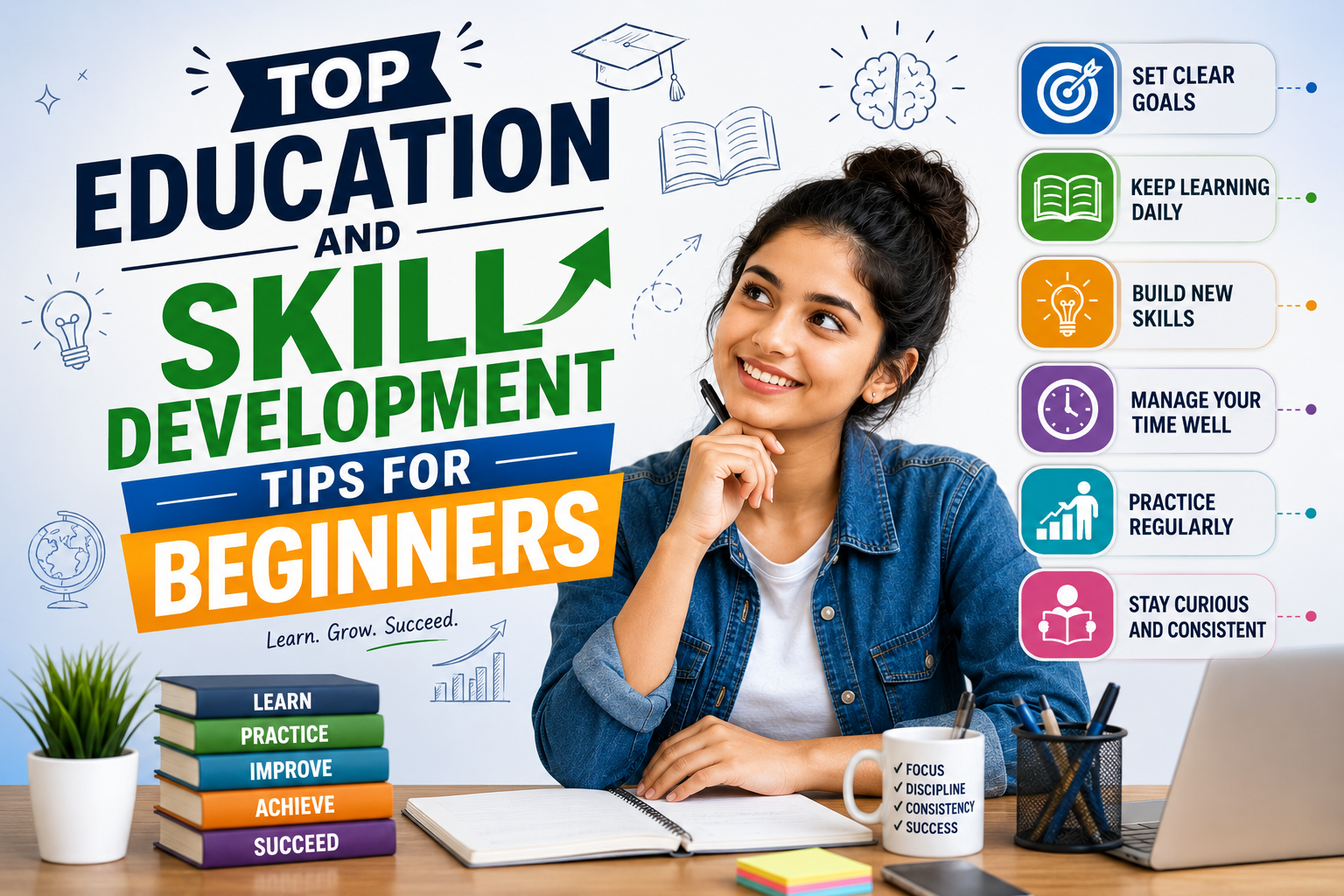
Education is the foundation of a successful life, but learning should never stop after school or college. In today’s fast-changing world, developing new skills is just as important as earning good grades. Whether you are a student, a fresh graduate, or someone who wants to improve your career, learning new skills can help you achieve your personal and professional goals.
Technology, artificial intelligence, and digital jobs are changing the workplace every year. Employers now look for people who can solve problems, communicate well, adapt to change, and continue learning throughout their lives. That is why education and skill development have become more important than ever.
In this guide, you will learn the best education and skill development tips for beginners. These simple and practical tips will help you become a better learner, improve your confidence, and prepare for future success.
Why Education and Skill Development Matter
Education gives you knowledge, while skills help you use that knowledge in real life. When you combine both, you become more capable, confident, and ready for new opportunities.
Some benefits of continuous learning include:
- Better career opportunities
- Higher confidence
- Improved problem-solving skills
- Better communication
- Increased creativity
- Higher earning potential
- Personal growth
Learning new skills is an investment that benefits you for a lifetime.
1. Set Clear Learning Goals
Before starting your learning journey, decide what you want to achieve.
Your goals might include:
- Learning a new language
- Improving computer skills
- Becoming a better writer
- Preparing for exams
- Learning digital marketing
- Improving public speaking
Clear goals give your learning a clear direction and help you stay motivated.
2. Create a Daily Learning Routine
Consistency is one of the biggest secrets to success.
Instead of studying for many hours once a week, spend a little time learning every day.
A simple daily routine may include:
- Reading for 30 minutes
- Watching educational videos
- Practicing new skills
- Reviewing notes
- Completing exercises
Daily learning builds long-term knowledge.
3. Improve Your Reading Habit
Reading is one of the easiest ways to improve your education.
Read different types of content such as:
- Books
- Educational blogs
- Newspapers
- Research articles
- Online tutorials
Reading improves vocabulary, knowledge, and critical thinking.
4. Learn Digital Skills
Digital skills are essential in almost every career today.
Important digital skills include:
- Microsoft Office
- Google Workspace
- Email communication
- Internet research
- AI tools
- Basic graphic design
- Social media management
Learning these skills increases your career opportunities.
5. Develop Communication Skills
Strong communication helps you succeed in school, college, and the workplace.
Practice:
- Speaking clearly
- Listening carefully
- Writing professionally
- Giving presentations
- Participating in discussions
Good communication builds confidence and improves relationships.
6. Improve Time Management
Managing your time helps you learn more without feeling overwhelmed.
Helpful habits include:
- Creating a schedule
- Setting priorities
- Completing tasks on time
- Avoiding procrastination
- Taking regular breaks
Time management increases productivity and reduces stress.
7. Learn Problem-Solving Skills
Every profession values people who can solve problems effectively.
Develop this skill by:
- Analyzing situations carefully
- Asking questions
- Thinking creatively
- Finding practical solutions
- Learning from mistakes
Problem-solving improves both academic and professional performance.
8. Practice Critical Thinking
Instead of memorizing everything, try to understand the reasons behind ideas.
Critical thinking means:
- Asking “why”
- Comparing different opinions
- Checking facts
- Evaluating information
- Making logical decisions
This skill helps you become an independent learner.
9. Build Financial Knowledge
Every beginner should understand basic personal finance.
Important financial skills include:
- Budgeting
- Saving money
- Managing expenses
- Investing basics
- Avoiding unnecessary debt
Financial education helps you make smart money decisions throughout life.
10. Learn Basic Technology Skills
Technology is part of almost every job today.
Useful technical skills include:
- File management
- Cloud storage
- Online collaboration tools
- Video conferencing
- Cybersecurity basics
Technology makes learning and working more efficient.
11. Take Online Courses
The internet provides thousands of learning opportunities.
Online courses allow you to:
- Learn at your own pace
- Improve career skills
- Earn certificates
- Study from anywhere
Choose courses that match your goals and interests.
12. Practice Every Day
Learning becomes stronger through practice.
For example:
- Writers should write daily.
- Programmers should code regularly.
- Designers should create projects.
- Public speakers should practice speaking.
Regular practice builds confidence and improves performance.
13. Learn from Mistakes
Mistakes are a natural part of learning.
Instead of becoming discouraged:
- Identify your mistakes.
- Understand what went wrong.
- Correct the problem.
- Keep practicing.
Every mistake helps you grow.
14. Build Self-Confidence
Confidence helps you apply your skills successfully.
You can improve confidence by:
- Setting small goals
- Celebrating progress
- Learning continuously
- Speaking positively to yourself
- Accepting challenges
Confidence grows through consistent action.
15. Stay Curious
Curiosity keeps your mind active.
Always ask questions such as:
- How does this work?
- Why is this important?
- What can I learn next?
Curious people continue growing throughout their lives.
16. Learn Teamwork
Most careers require working with others.
Develop teamwork by:
- Respecting different opinions
- Sharing responsibilities
- Helping teammates
- Solving conflicts calmly
- Communicating openly
Good teamwork creates better learning experiences.
17. Use Technology for Learning
Technology can make learning easier when used wisely.
Helpful resources include:
- Educational websites
- Learning apps
- AI study assistants
- Online libraries
- Video tutorials
- Digital flashcards
Focus on learning instead of becoming distracted by entertainment.
18. Take Care of Your Health
Healthy students and professionals learn more effectively.
Maintain good habits by:
- Sleeping 7–9 hours
- Eating healthy meals
- Drinking enough water
- Exercising regularly
- Managing stress
A healthy body supports a healthy mind.
Common Mistakes Beginners Should Avoid
Many beginners slow their progress by making avoidable mistakes.
Avoid these common errors:
- Waiting for the perfect time to start
- Trying to learn too many skills at once
- Giving up too early
- Ignoring practice
- Poor time management
- Avoiding feedback
- Fear of making mistakes
- Depending only on classroom learning
Learning from these mistakes will help you improve faster.
Daily Habits for Continuous Growth
Successful learners usually follow simple daily habits.
These include:
- Reading every day
- Practicing new skills
- Reviewing notes
- Asking questions
- Staying organized
- Managing time wisely
- Learning something new regularly
- Maintaining a positive attitude
Small daily improvements lead to long-term success.
The Importance of Lifelong Learning
Learning should not stop after graduation.
Industries continue to change, and new technologies appear every year.
People who continue learning are more likely to:
- Find better jobs
- Earn higher salaries
- Adapt to change
- Build successful careers
- Achieve personal growth
Lifelong learning keeps you competitive and prepared for the future.
Final Thoughts
Education and skill development are two of the most valuable investments you can make in yourself. While education provides knowledge, practical skills help you apply that knowledge in real-life situations. Together, they create a strong foundation for personal and professional success.
Start with small, achievable goals and build a daily learning habit. Focus on improving communication, digital skills, time management, critical thinking, and financial knowledge. Practice regularly, stay curious, and never stop learning.
Remember that success is not measured by how much you know today but by your willingness to keep learning tomorrow. Every new skill you develop brings you closer to your goals and opens the door to new opportunities.
Top 10 High-Paying Jobs That Are in Demand in 2026
LinkedIn Jobs