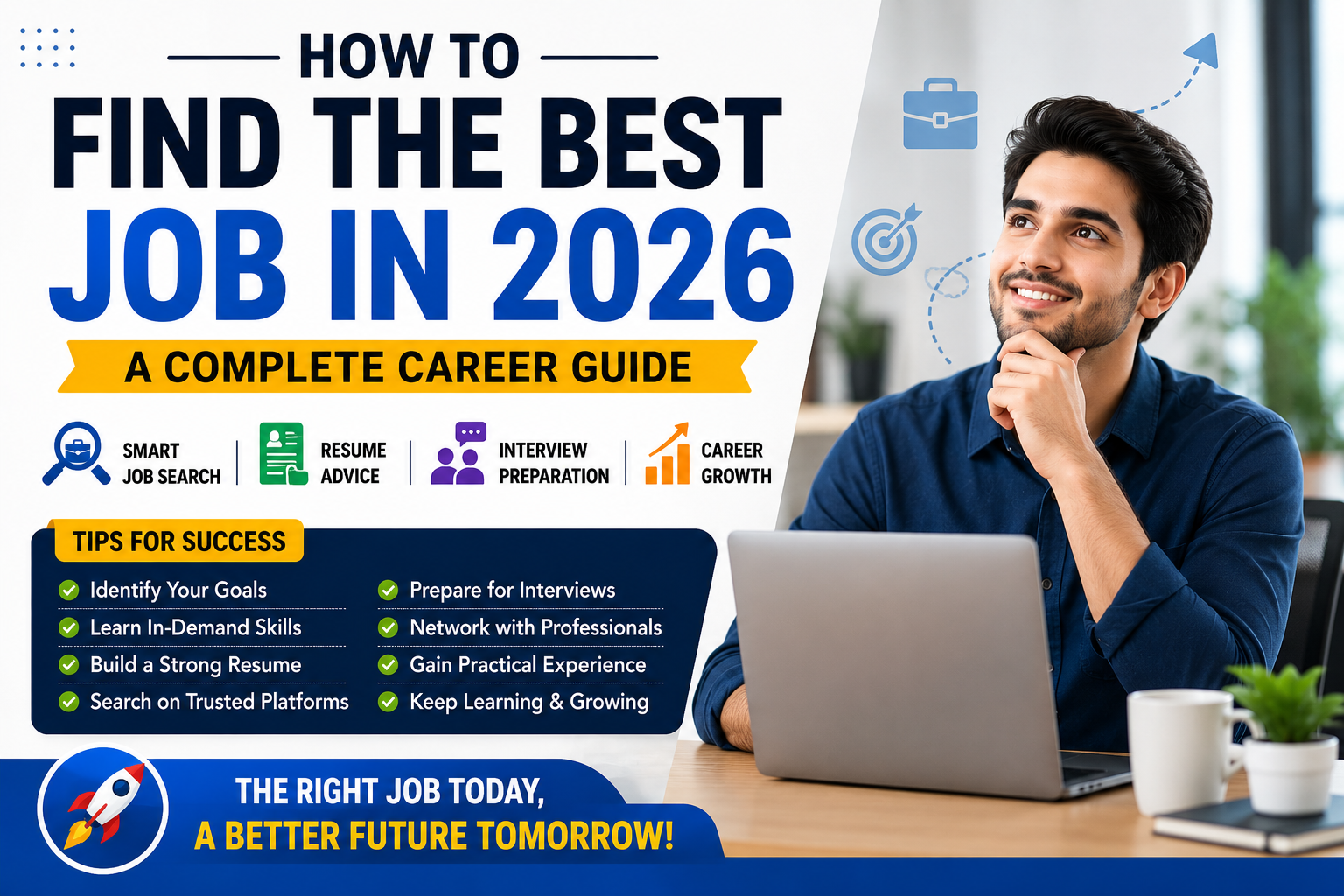
Finding the right job is one of the most important steps in building a successful career. In 2026, the job market is more competitive than ever, but it also offers many exciting opportunities. Companies are looking for skilled, motivated, and adaptable people who can help their businesses grow.
Whether you are a student, a fresh graduate, or someone looking for a career change, knowing how to search for the right job can save you time and improve your chances of success.
This complete career guide will help you understand how to find the best job in 2026 with practical tips that are easy to follow.
Understand Your Career Goals
Before applying for jobs, take some time to understand what you really want.
Ask yourself these questions:
- What type of work do I enjoy?
- What are my strongest skills?
- What industries interest me?
- Do I prefer working remotely or in an office?
- What salary am I expecting?
Having clear career goals helps you focus on the right opportunities instead of applying randomly.
Research Growing Industries
Some industries are growing faster than others. Choosing a career in a growing field can provide better job security and higher salaries.
Some of the fastest-growing industries in 2026 include:
- Artificial Intelligence (AI)
- Cybersecurity
- Software Development
- Healthcare
- Digital Marketing
- Data Science
- Cloud Computing
- Renewable Energy
- Finance
- E-commerce
Research these industries to see which one matches your interests and skills.
Learn Valuable Skills
Employers today want candidates with practical skills.
Some of the most in-demand skills include:
- Communication
- Problem Solving
- Time Management
- Leadership
- Microsoft Office
- Digital Marketing
- Graphic Design
- Programming
- Data Analysis
- Artificial Intelligence Basics
Learning new skills through online courses and practice can make you more competitive.
Build a Professional Resume
Your resume is your first impression.
A professional resume should include:
- Contact Information
- Professional Summary
- Skills
- Work Experience
- Education
- Certifications
- Projects
Keep your resume simple, clear, and tailored to each job you apply for.
Write a Strong Cover Letter
A cover letter allows you to introduce yourself and explain why you are the right candidate.
Your cover letter should include:
- Why you want the job
- Why you chose the company
- Your most relevant skills
- How you can contribute
Keep it short, professional, and personalized.
Create a Professional Online Profile
Many employers search candidates online before scheduling interviews.
Create a professional profile that includes:
- A professional photo
- Your education
- Skills
- Certifications
- Work experience
- Projects
A complete online profile can increase your visibility to recruiters.
Search Jobs on Trusted Platforms
Use reliable job websites to find genuine opportunities.
Search using keywords related to your skills and preferred location.
You should also:
- Set job alerts
- Apply early
- Update your profile regularly
- Save interesting job listings
Checking job websites daily increases your chances of finding new openings.
Customize Every Job Application
Avoid sending the same resume to every employer.
Instead:
- Read the job description carefully.
- Update your resume.
- Add relevant keywords.
- Highlight matching skills.
- Write a customized cover letter.
Personalized applications often receive more attention from recruiters.
Prepare for Job Interviews
Interview preparation is one of the most important parts of the hiring process.
Before your interview:
- Learn about the company.
- Practice common interview questions.
- Review your resume.
- Prepare examples of your achievements.
- Dress professionally.
- Arrive on time.
Confidence comes from preparation.
Build a Professional Network
Networking can help you discover opportunities that are not publicly advertised.
Connect with:
- Teachers
- Friends
- Family members
- Former classmates
- Recruiters
- Industry professionals
Attend career fairs, workshops, and professional events whenever possible.
Networking often leads to valuable job referrals.
Gain Practical Experience
If you have little experience, don’t worry.
You can build your resume through:
- Internships
- Freelance work
- Volunteer projects
- Personal projects
- Online competitions
- Part-time jobs
Every experience teaches valuable skills that employers appreciate.
Continue Learning
The workplace changes every year.
Keep improving yourself by:
- Reading career blogs
- Watching educational videos
- Taking online courses
- Earning certifications
- Learning new software
- Improving your English communication skills
Continuous learning makes you a stronger candidate.
Stay Organized During Your Job Search
Job searching becomes easier when you stay organized.
Create a simple spreadsheet to track:
- Company name
- Job title
- Application date
- Interview date
- Application status
- Follow-up reminders
Organization helps you avoid missing important opportunities.
Develop Soft Skills
Technical knowledge is important, but employers also value soft skills.
Work on improving:
- Communication
- Teamwork
- Leadership
- Adaptability
- Creativity
- Critical Thinking
- Emotional Intelligence
- Time Management
Strong soft skills help you succeed in almost every profession.
Common Job Search Mistakes to Avoid
Many job seekers make mistakes that reduce their chances of getting hired.
Avoid these common errors:
- Applying for every available job
- Using the same resume everywhere
- Ignoring the job description
- Having grammar mistakes
- Applying late
- Missing interview appointments
- Giving incomplete information
- Using an unprofessional email address
- Not researching the company
- Giving up after a few rejections
Learning from mistakes improves your future applications.
Daily Habits That Help You Find a Job Faster
Develop productive habits every day.
Try to:
- Apply for 5–10 suitable jobs.
- Learn one new skill.
- Update your resume regularly.
- Practice interview questions.
- Expand your professional network.
- Read industry news.
- Improve your communication skills.
Small daily improvements create long-term career success.
Why Choosing the Right Job Matters
The right job offers more than just a salary.
A good career provides:
- Financial stability
- Professional growth
- Better work-life balance
- Learning opportunities
- Job satisfaction
- Long-term success
Choosing the right career path helps you stay motivated and achieve your personal and professional goals.
Final Thoughts
Finding the best job in 2026 requires preparation, patience, and continuous learning. By following this complete career guide, you can improve your resume, develop valuable skills, prepare for interviews, and confidently apply for jobs that match your career goals.
Remember that success does not happen overnight. Every application, interview, and new skill brings you closer to your dream career. Stay positive, keep improving yourself, and never stop learning. With determination and the right strategy, you can find a rewarding job and build a successful future in 2026 and beyond.
Top 10 High-Paying Jobs That Are in Demand in 2026
LinkedIn Jobs